
Flow Funding Activists, South Africa & UK: 2025 Stories
Our Flow Funding Programme shares power with tireless activists and visionary leaders by giving them direct access to funds, allowing them to allocate resources based on expertise and intuition. This trust-based, human-centred approach cuts through bureaucracy, ensuring funds reach overlooked communities and projects, creating significant local impact — explored in these stories.
Meet Our Flow Funding Activists 2025-27 Cohort (SA & UK):
FUNZANI MTEMBU (South Africa) — Economist, writer, activist. An investment & economic analyst pursuing a Master’s in Economics & Development at Wits, Funzani researches race, gender and political economy while advancing grassroots feminist justice movements.
ANDISWA KOYANA (South Africa) — Community organiser focused on food security, rural women’s empowerment & youth development. With a background in Political Science & Sociology, Andiswa supports community-led food cultivation, learning and care initiatives across South Africa.
YOLISWA MAHOBE (South Africa) — Mother, horticulturalist and nature practitioner. Raised in a rural village, Yoliswa draws on horticulture and permaculture to cultivate deeper connections between people, plants & the healing power of nature.
THABISA BOBO (South Africa) — Community development practitioner & human rights advocate from Peddie, Eastern Cape. Thabisa works with women and youth on gender equality, sexual and reproductive health rights & rural development initiatives.
NCEDISA NKONYENI (South Africa) — African futures–centred systems change and field learning practitioner. Former founding director of Bertha House activist hub, Ncedisa works across storytelling, systems thinking & social justice to steward transformative narratives & collective change.
TILLY GIFFORD (UK) — Based in Scotland & intertwined with India's farming movements, Tilly has spent over a decade working on decolonial land justice. She practices collective living, food-growing, and education, combining resistance, joy, & community care to nurture alternative ways of living.

Funzani Mtembu: "What struck me most was the ripple effect"
In this time of great transition, what do you feel called to steward?
In this time of great transition, as we witness rising violence, wars, and deep fractures across Africa and the world, I feel called to steward spaces that restore balance, compassion, love and collective healing and consciousness.
Humanity stands at a crossroads where division, greed, and despair threaten to consume our collective spirit. Yet, I believe that amidst this turbulence lies an extraordinary opportunity to remember our shared essence and reawaken our capacity for compassion, for love, for peace and resistance.
My calling is to nurture the kinds of spaces that allow people to reconnect with themselves, with one another, and with the Earth. Spaces where tenderness becomes resistance, where silence transforms into listening, and where art, dialogue, and reflection become tools of social repair.
In a world numbed by violence and grief, I feel responsible for protecting and cultivating the sacred moments when people gather with honesty and courage to imagine a gentler way of being.
To steward healing in these times is to refuse apathy and to choose presence. It is to hold grief with dignity, to listen deeply to the voices long ignored, and to invite others into a practice of collective care. I believe healing is not passive, it is an act of courage, of radical love, and of remembering our humanity amid chaos.
This is the work I feel called to carry forward.
A Flow Funding experience that felt transformative for you?
One of the most powerful experiences was witnessing the Amanzi Sessions: Love Healing and resistance by the South African based Pan African Jazz band iPhupho L’ka Biko.
“Amanzi” means water, and like water, these sessions flow where healing is needed most.
They are artist-led, alcohol-free gatherings that use art, dialogue, and ritual to reimagine community life and disrupt destructive social patterns, particularly those rooted in the normalization of alcohol abuse, gratuitous violence, and perpetual state of conflict with our being as subjects of different kinds of historical and present oppressions.
The session’s “Men’s Edition” was intimate gathering where three men, two advocates and one artist, came together to lead a dialogue on gender-based violence and accountability. This was not a typical panel or performance; it was a deeply human encounter. Men spoke vulnerably about the harm they had witnessed or participated in, and about their desire to unlearn harmful norms and cultivate new forms of care.
The Flow Funding support made it possible to bring this space to life from the logistics and artist stipends to creating an atmosphere that felt safe, dignified, and sacred. But what struck me most was the ripple effect.
Women in the audience later shared how healing it was to witness men confronting patriarchy in such an honest and introspective way. Many said it gave them hope that transformation is possible, that accountability can coexist with love, and that art can open doors where formal activism sometimes cannot.
In a country like South Africa, where gender-based violence remains a national crisis, such spaces are rare and invaluable.
The Flow Funding also helped to sustain the broader vision of Amanzi Sessions, creating monthly, multidisciplinary gatherings that support both social change and economic opportunity for artists.
Emerging female musicians, poets, and visual artists have been able to showcase their work, receive mentorship from seasoned practitioners, and earn small but meaningful incomes.
These engagements restore dignity and confidence, especially for women navigating the precarity of creative livelihoods. In doing so, Amanzi Sessions bridges art and economy, healing and livelihood, proving that social transformation can also generate material empowerment.
For me, the most transformative realisation has been how art, when resourced and trusted, becomes a catalyst for community healing that transcends gender, class, and background.
The Flow Funding didn’t just support an event, it nourished a living ecosystem of creative resistance and renewal. It allowed us to build something that continues to grow, a space where men learn to listen, women reclaim power, and everyone is invited to show up as they are, with nothing to hide behind but truth and water.

Andiswa Koyana: "Flow Funding enabled her to get more Government funding"
In this time of great transition, what do you feel called to steward?
I have always been drawn to working with children and youth in general, so when this opportunity presented itself, I was automatically drawn to focus on children and youth challenges. I knew groups that are in dire need of the assistance and thus it was easy for me to decide.
If children and youth are kept busy and away from the streets in constructive ways, then our communities have a chance of getting out of the distress and challenges they are faced with.
My motto is: EDUCATE A CHILD, LIBERATE THE CLAN, THE COMMUNITY, AND ULTIMATELY THE COUNTRY”.
At the end of the day, children and youth are tomorrow’s leaders. I am thus inclined to say this is what I was CALLED TO STEWARD!
A Flow Funding experience that felt transformative for you?
Through my experience as a Flow Funder as of the beginning of 2025, I had the pleasure
of giving financial assistance to the following organisations and individuals:
Ingane Edu Care — Support with Furniture & Foodstuffs for the Preschool
Uncedo Pre School — Support with Fire Extinguishers, Water Tanks, mattresses, stationary
Emfuleni Cultural Group — support with sound equipment
Emfuleni Cultural Centre — Upgrading Toilets, Roof Waterproofing & painting the Centre
Abantu ChorUs Transport Fund
Support to two youths with tertiary registration fees & purchase of laptops
Municipal bill support for two elderly women (to keep electricity & lights on)
When we started the journey, we were told that we could decide on one funded project or many different projects. Because of the many challenges facing our communities I decided to spread the funds across these seven projects.
All the grants have touched me in different ways, however I choose to single out the Uncedo Pre-School in Eastern Cape as my transformative moment for this year’s journey.
Zigudu location, these are the plains, valleys and hills that are the source of my being. This is where my Mom was born. At the time, few families could afford to see their kids through any education. It was difficult enough to feed the families.
My mother was one of those lucky ones who got the education.
We see here a model where in the rural areas the way out of poverty is usually to educate the older children and they too educate the younger ones. Some families are not fortunate enough for even this to happen.
Uncedo Pre-School was born as a result of the vision of a teacher who saw a need to help the illiterate parents who had no means and some because of poverty did not even see the value of education. This teacher was later assisted by a lady known as Gosina who ended up taking over the running of the Pre-School.
When I visited my Mom’s home and learnt of the plight of this pre-school, I was very touched. I knew some of the kids personally; they would hang around our homestead, some being neighbour’s kids and extended family.
Gosina is running the Pre-School from her pocket and sometimes through the assistance of the community, and this has been the case for about 15 years now. During this period, she has been applying for government assistance to no avail because she could not meet some of the requirements.
The joy in my heart when she sent me a message saying that she was now well on her way towards being funded by the government because of the funding she got from me. The funding enabled her to get all the pre-requisites to get the Government funding.
She is now in possession of a Partial Care certificate — something which also enabled her to open a Bank account for the Pre-School. She now awaits the Government Funding.
This has indeed been a TRANSFORMATIVE MOMENT for me. The things that we take for granted are actually the corner stone of someone’s future!

Yoliswa Mahobe: "Resourcing more days filled with joy & laughter for the children"
In this time of great transition, what do you feel called to steward?
I feel called to steward the environment and people with urgency.
This makes me think of the saying: “When student is ready, the teacher appears”. Over time, through my work I've identified active people who get up and go out to look for opportunities — their soil is fertile, their seeds are planted and germinating. People might be at different stages, but I can sense if there is a strong life force.
Nature conservation and reconnecting to nature has also been something that opens my heart. It makes me think that if we could activate more people to connect to nature they would be connected to the higher power that activates the Godliness in each of us to co-create a holistic world.
A Flow Funding experience that felt transformative for you?
I have only been able to accept myself radically in the last two years or so — receiving the flow funds has been a confirmation of a connecting to the infinite possibilities. I have been able to take breaths and say yes — I am aligned.
The beneficiaries that I connected with on this grant have been in my view for years, and wished I could do something.
There is a family with three young children and two teenagers that I assisted. Getting closer to their story made my heart sore, as I could see that if their own living and capable parents are this neglectful, helping will make the parent stay more relaxed. I decided to stop providing more financial assistance and sought out professional social workers to get involved. I realised that the children were suffering because their mother choose herself over the kids and needed not financial intervention but something different.
What transformed my thinking was that money was not going to really regenerate the situation. This has made me be more sensitive to people’s situation and understand to meet people where they are. In the next chapter in their lives the children will move to another province and hopefully start school being cared by their grandparents.
I have now found it better to work with people that are already activators in my community.
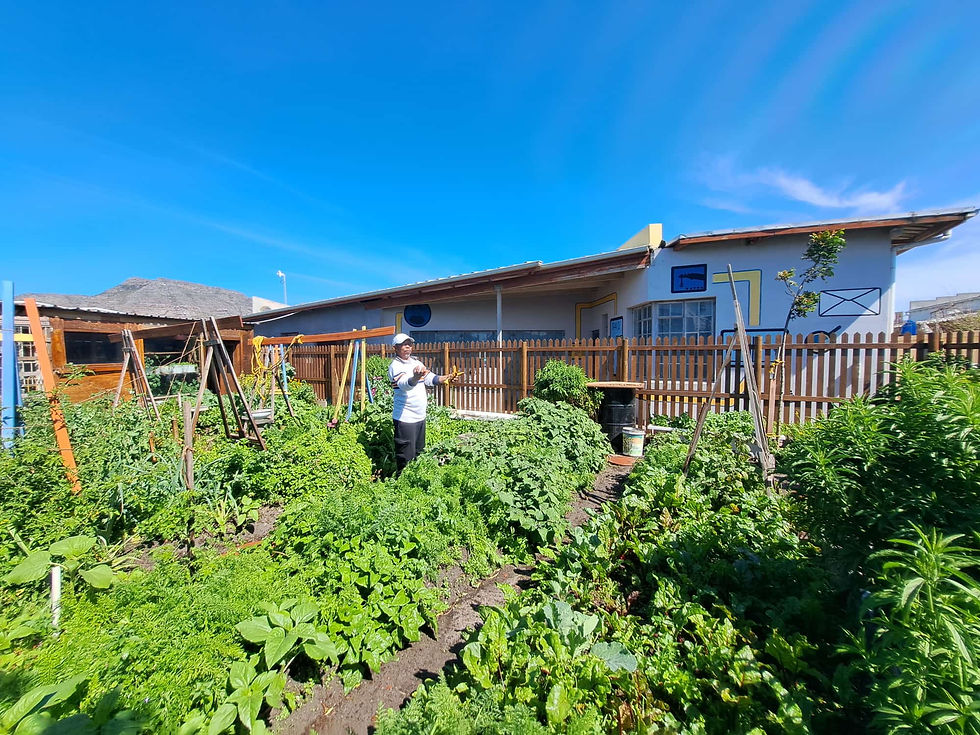
One of the projects that I supported was Vrygrond Peace Garden, in the townships of Cape Town. This place is a sanctuary for the little children in that community.
This meant more resources were available to create more days filled with joy and laughter — intentionally creating a second home that is full of life and love for the children.

Thabisa Bobo: "Deepened my understanding of the power of collective giving"
In this time of great transition, what do you feel called to steward?
It is a profound honour to embody the concept of stewardship, as it inherently conveys a deep sense of accountability and trusteeship.
To me, stewardship signifies a sacred responsibility to prioritize well-being, growth, and prosperity of others and something greater than me or my own interests.
This understanding has beautifully aligned with my personal experience, where I've come to see my role as one of devoted care and attentive oversight, focused on nurturing and supporting the needs of those or what has been entrusted to me. This perspective has not only shaped my approach but has also enriched my journey, as I've embraced the notion that true stewardship is about selflessly contributing to the greater good.
A Flow Funding experience that felt transformative for you?
Joining Be The Earth's Flow Funding programme has been a pivotal point for me. Specifically, the most transformative aspect has been the hands-on process of evaluating and deciding which organisations to support.
The challenge of discerning which initiatives to fund, particularly during economically challenging times when many worthy cases are presented, has been a significant learning curve and a key part of my growth as a flow funder.
Every aspect of this experience has been truly awesome — but what’s stood out the most is the opportunity to learn about the tangible impact of the funds we've allocated. Hearing about how the support has transformed the lives of others through the organisations we've partnered with has been incredibly fulfilling and eye-opening.
Seeing firsthand the ripple effects of our funding decisions has not only deepened my understanding of the power of collective giving but has also made the complexities of decision-making more meaningful.
There is no price tag that one can put next to the indescribable feeling of helping someone.
Setting aside my Saturdays to dedicate to this work and actively seeking out organisations to support has also been instrumental in shaping my approach to flow funding. Overall, this journey has been a rich learning experience that has broadened my perspective on the potential for positive change that comes from thoughtful and intentional funding.

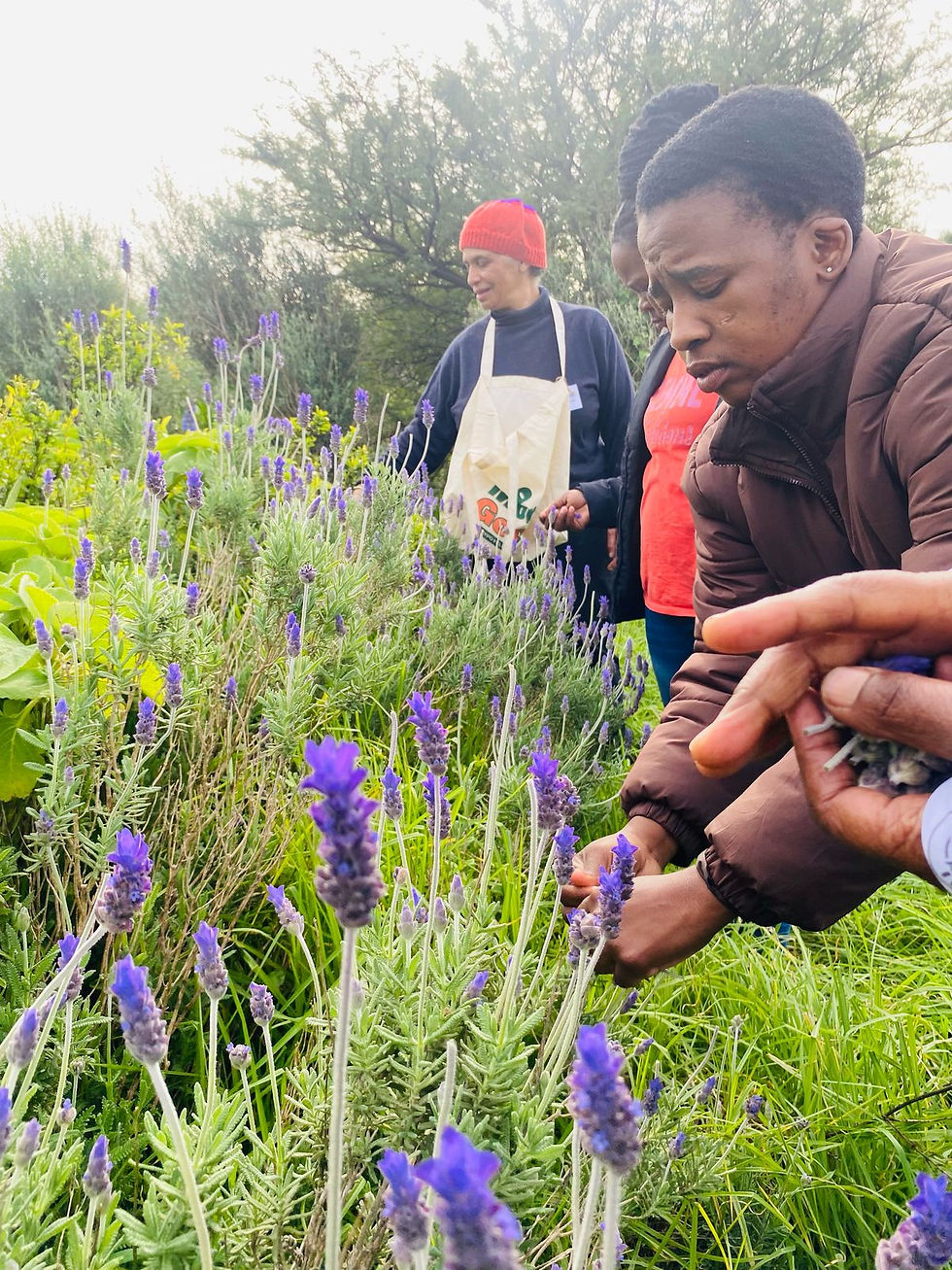
Above: three pictures from various activities conducted by Masifundisane from the financial support (beadwork training, exhibition with Peddie Library and the Ngqushwa Municipality and one their final products on display at the art centre).

Ncedisa Nkonyeni: "An illumination of the path of collective healing"
In this time of great transition, what do you feel called to steward?
This moment presents the world with a singular choice. How we respond determines whether we tip further into polarisation or move toward a system in service of reconnection, allowing us to build a more healing social order.
From where I stand — nurtured in a collectivist society while immersed in the Western education system from a young age — I cross multiple worlds daily. I have come to see how differently these worlds metabolise the same information, and I have developed the muscle to identify the patterning that feeds our global dynamics.
The world needs new patterns if it is to tip toward healing. Within this context, I am called to accompany change agents as they learn to recognise wisdom — regardless of the cloth, language, or key that holds it — and to channel the courage to heed its call.
A Flow Funding experience that felt transformative for you?
One stream of work enabled by the funds was a series of micro-grants for community-networked women, designed to teach grantees how to produce natural soaps and launch a small business.
Five women were nominated by their communities; all but one completed the training. While the 80% throughput was high, it did not surprise me. What did delight me was the community that formed almost immediately among the five women and their trainer (whom they still fondly call “Teacher”).
Throughout the training and beyond, the women have supported one another in attending sessions, learning the craft, and sourcing materials. Their relationship extends to supporting each other’s wellness, advising on personal matters, celebrating each others’ triumphs and and holding space during moments of grief.
Their instinct and willingness to deploy collectivist relating with each other immediately is a powerful reminder of how the paradigm of transaction — simply paying for a service or product — has displaced the paradigm of true human connection.
It is also an illumination of the path to the planet’s collective healing.
Above: micro-grants to support five women to learn soap-making using indigenous South African plants & how to run a small business.

Tilly Gifford: "We can make that happen, without fear of incriminating paper trails, due to flow funding."
In this time of great transition, what do you feel called to steward?
As someone from the West who works in internationalism, it is so apparent that movements in the Global South have strong and dignified networks, awareness of collective identities and histories, awarenesses of what commons they defend... and often very scarce access to resources to realise these.
And in the West, where capitalism and colonialism emanated from, we are stricken with individualism. It is difficult to build trust, we suffer weak collective identity and poor analysis of our context.
We have more access to resources, but the fabric of society is eroded, making it hard to build resistance or to have vision together.
Putting time, care, love, commitment, organisation in a huge way in Scotland, to build the realities we need together, and to collectively learn to trust them. Slow and hard work — and so necessary.
To put monetary resources into the movements in the Global South, as the movements have the strength and dignity and long term vision. And to convey the hope, joy and vision from these places — fuel for global resistance.
I feel called to steward more internationalism in such processes.
A Flow Funding experience that felt transformative for you?
There have been many, especially on the Zoom calls with the other nominees.
Being alongside the leader of an indigenous movement, who is from an area my colonial relatives inhabited. The movement have been reclaiming ancestral land for over four decades. We have lived and worked together for several months, in India and in the UK.
This person, who has spent her life in and out of prison, and in constant debt, and been an agricultural labourer to support the movement work, dreamt out loud:
“If I had funds I could have a 5-day meeting for all the indigenous women in the 14 districts to come together to self-organise for further land reclaiming”.
And to quite simply say that: “we can make that happen, without fear of incriminating paper trails, due to the flow funding."
This transformative moment, of trust and collaboration, came about through this exceptional FLOW system.


