
Letting Go of Having All the Answers: An Interview with Renata Minerbo
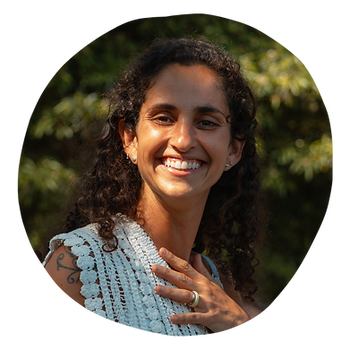
Renata Minerbo, Head of Community & Partnerships, Trustee, Be The Earth
If nature were speaking through me, I think she would start by reminding us that the solutions are already here. That people are part of the ecosystem — not separate from it.
I think she would want us to remember how her architecture is so perfect, balanced, and beautiful.
And that when we extract too much, or try to overcomplicate things, we simply get in the way.
She might end with something very simple: observe more, overthink less.
Let go of the anxiety of having all the answers.
That invitation — to observe, to listen, to loosen our grip on certainty — has quietly shaped my learning over the past years.
Learning to live with not knowing
We’re living through overlapping crises, and I often feel overwhelmed by their scale and complexity. It’s really hard to imagine ending inequality in our lifetime — and even harder to feel responsible for something so vast. I remember feeling that weight very strongly in my early twenties: the urgency to fix things, to do everything, to get it right.
Over time, I’ve had to accept that we can only do so much.
Our generation inherited the consequences of an extractive mindset — power over people, and power over nature — and the complexity of it all can feel paralysing.
What helped me was hearing social justice described not as a destination, but as a lens to the world. Instead of asking, “Is this going to solve inequality?”, the question becomes: How is this moving us towards a more equitable and just world?
That shift matters.
It starts with orientation, not with the urge to fix everything. It feels more like a guiding North Star than a checklist — something you move towards.
This perspective has required humility. Letting go of saviourism. Letting go of the anxiety of having all the answers. Learning to sit inside uncertainty without freezing — or rushing to control.
What happens when wealth learns to listen

In 2009, I took part in a year-long transformative learning journey with the Elos Institute in Brazil, called Warriors Without Weapons (Guerreiros Sem Armas). It was there that I learned the power of active listening. A section of the methodology is called affection — a practice of genuinely connecting with people’s hearts, building friendship, and stepping out of the saviour role.
Affection teaches you to become truly interested in what people know, in their lived experience and life stories. And of course, none of that is possible without listening — deep, active listening. Like a muscle, the more you practise it, the more natural it becomes.
Since learning that, it has made no sense to me not to learn from other people’s feedback and lived experience. It can be not only a shortcut in our collective learning journey, but also saving a lot of time and some mistakes on the way.
At Be The Earth, this learning translated into a simple but radical question: What happens when wealth listens, rather than decides?
We don’t fully live outside transactional giving — and we’re honest about that. But we’re constantly making a choice: either to do more scattered, transactional work, or to do less and go deeper, relationally. We choose the latter. We know meaningful change rarely grows from one-off exchanges or distant decision-making, even though building long-term, trust-based relationships is slower and not always easy.
So we start by listening — asking what resources might be useful, and how the relationship itself can be reciprocal — knowing this is a practice we’re still learning into.
Reciprocity isn’t one-directional. We often learn just as much as we give.
When money becomes heavy — and how it might flow instead

One of the most formative influences on our work has been Marion Weber — fourth generation granddaughter of the Rockefeller family — who created the concept of Flow Funding in 1991. She was one of the first people we spoke to when Seth and I seeded the idea of Be The Earth in 2019. Her thinking resonated deeply. She was really inspiring.
In a letter to her father, in 1991, Marion wrote:
“I have been developing a flow fund concept in order to help lighten and brighten this work by including the wisdom and creativity of others. Ultimately my vision is to empower all people to be philanthropists. I was feeling pretty overwhelmed and heavy with this money work. It seemed so lonely and it left me not enough time to do healing and creative work. It also robbed me of time to just have fun and enjoy my relationships.
I know that having too much money to handle is unhealthy for myself and the world. Therefore I seek a better way.”
Flow Funding became her response. We learnt directly from Marion and have developed her method of decentralised giving over the past five years.
The idea is simple: you invite people you trust, who are aligned with your values, and you transfer money directly to their personal bank accounts. They have full autonomy to decide how to move that money — who to support, how many people, and in what way. They report back not through metrics, but through story.
We meet bi-monthly so Flow Funders can share experiences, build community and work through challenges together.
I feel like it’s a win-win for everyone. For us, it’s very little admin for a very wide reach. For them, they receive a stipend for their time, knowledge, and network they’ve built up over the years. We advise they should keep up to 25% of the total as their stipend, disbursing the remaining 75%.
Often, they make many small micro-grants — something that would be really hard for our small team to manage, but which we believe deeply in.
Through this process, money moves closer to the ground — and learning moves closer to the body.
When power moves rather than disappears
One of the biggest lessons Flow Funding has taught me is that power doesn’t disappear just because you intend to share it. Even when you try very hard to dismantle power dynamics, they remain — they simply move.
What changes is who carries responsibility.
When people receive the money, they often feel an immediate weight. A sense of responsibility that can be overwhelming. Some feel the need to control everything, to collect receipts, to prove legitimacy — even when no one is asking for that.
I remember in our pilot year, a community leader spent enormous energy proving that he wasn’t receiving money from political parties, that he hadn’t “sold his soul”. We hadn’t anticipated that dynamic at all.
Others choose discretion — acting as quiet intermediaries rather than visible funders. And some genuinely enjoy being in a position of enabling financial support to their network. It’s a mix of community context and personal disposition.
Recently, one flow funder shared that someone she had supported the year before came back asking for more money. She felt almost wounded — like, how dare you?! For her, it became a very embodied lesson in what it feels like to sit on the other side of that dynamic — a feeling funders know well.
These moments are uncomfortable, but they are also where learning happens.
Trust-based approaches are often described as soft, but in reality they can surface discomfort, self-awareness, and deep inner work.
And I think that experimenting in practice with each other’s roles, can really help build empathy between funders and fundees.
Learning from people — and from the Earth

I’m continually inspired by the people we learn from through this work. From the Wisdom Keepers we’ve invited into one of our Flow Funding circles — visionaries and practitioners like Satish Kumar, Helena Norberg-Hodge, Fabiana Maia, and others — to grassroots leaders who do miracles with almost no financial resources.
They activate entire networks. They remember practices their grandmothers used. They create something new, or something very old, with remarkable creativity and care. That ingenuity, born of necessity and relationship, is endlessly humbling. I find it so inspiring and heartwarming.
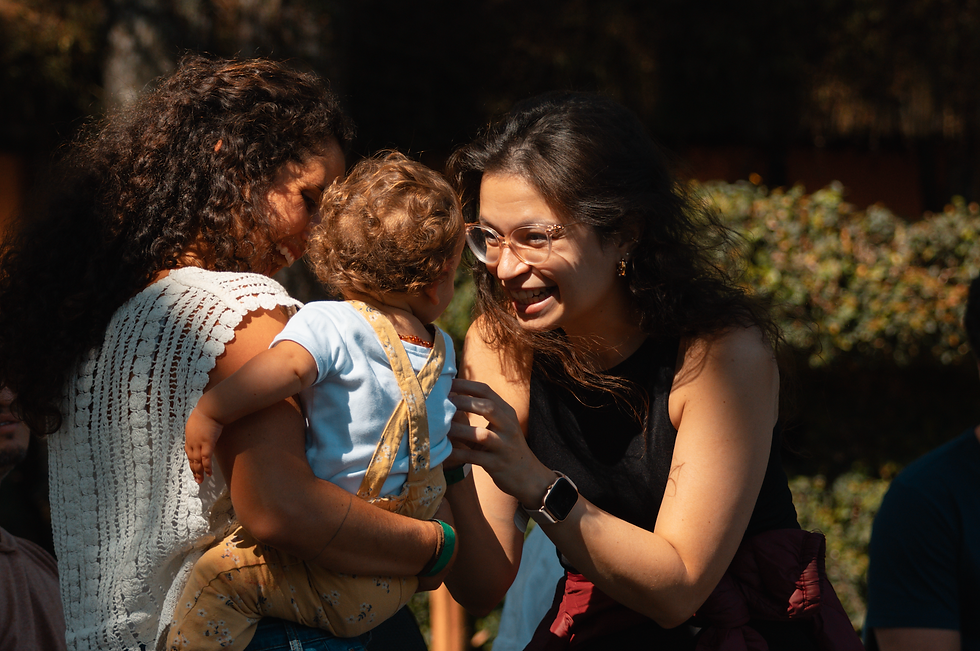
Recently, I’ve also been learning from our children. Having them present at our gatherings — in spaces where the future is being discussed — is rare, and deeply grounding. Their presence is a quiet reminder of why this work matters at all.
And then there’s the inner work. Coming from community activism into the funding world — and realising you can’t say yes to everyone — is heartbreaking. Learning how to say no, while staying human and connected, has perhaps been one of the hardest lessons of all.
Coming back to nature
When I come back to nature — and really listen — everything simplifies again.
She reminds me that people are not separate from the ecosystem, but one of its keystone species. That conservation without people misses something essential. The balance already exists — if we stop constantly extracting, stop overengineering, and stop assuming we know better.
And she reminds me, gently but firmly, to observe more and overthink less.
To let go of the anxiety of having all the answers.
_
Curious to learn more about Flow Funding?


