Food as an Act of Care: Be Hive Seasonal Talk III

Socio-Ecologist & Programmes Manager at SA Urban Food & Farming Trust Rirhandzu Marivate joined us for Be Hive Seasonal Talk III, alongside Rico Wessels — Nourish Programme Coordinator at the Sustainability Institute — to explore one of the Care Economy’s most fundamental questions:
If food is care, what would it mean to build food systems that care for the people who feed us?
This is Rirhandzu’s essay — an invitation to see food differently, and to see differently the people who make it possible.
When we talk about food security, whose responsibility are we really talking about, and whose labour are we relying on to make it possible?
Across South Africa, households are feeling the economic pinch. As the cost of living continues to rise, food is becoming increasingly difficult to afford, particularly for low-income households and communities in townships. We are seeing changes in how people buy food: what they buy, how much they buy, where they buy it, and the compromises they have to make to put food on the table.
For many households, this is no longer simply about choosing between different products or shopping at different retailers. It is about stretching limited resources, purchasing food in smaller quantities, relying on daily incomes, and making difficult decisions about what the household can go without.
And yet, when we talk about how communities access food, we often focus on the food itself: its availability, affordability, nutritional value and distribution. We spend far less time talking about the people who make that access possible.

What if we began to understand food not only as a commodity, but as an expression of care?
Food is one of the most fundamental ways in which we sustain life and care for one another. It is how we nurture children, support our families, look after our neighbours and maintain our communities. But food does not simply appear on our tables. It takes an enormous amount of human labour, knowledge, coordination and care to get it there.
The IPES-Food Food Work report draws attention to the extraordinary scale of this contribution.
According to the figures presented in the report, nearly 1.4 billion people work in the agrifood sector globally, while approximately 3.8 billion people live in households that depend on food and farming for their livelihoods.
Yet, despite being foundational to human survival, food workers are among the most exploited workers in the world. Their work is frequently precarious, underpaid or unpaid, and many face unsafe working conditions, discrimination and inadequate legal protections. Women and marginalised communities often bear a disproportionate share of these burdens.
There is a profound contradiction here: the people whose labour sustains our lives are often the people whose own lives and livelihoods are least protected.

I want to bring this contradiction closer to home, to our townships and communities, and to the often-invisible actors who make our food systems function every day.
Think about the informal food trader who wakes up in the early hours of the morning to source food, prepares meals for commuters, or sells vegetables in quantities that households can afford.
Think about the community gardener who grows food, shares a harvest, passes on knowledge and creates a space where people can gather and learn.
Think about the caregiver who stretches a household budget, plans meals around what is available, and ensures that children and older family members are fed.
Think about the community food organisation or food council that brings people together, coordinates resources and responds when households are struggling.
These actors do much more than move food from one place to another. They make food accessible, sustain relationships, respond to immediate needs and help communities navigate conditions of economic hardship.
In many instances, they do this where formal markets, public infrastructure and state support are inadequate, inaccessible or absent.
This brings me to the concept of infrastructures of care.
We tend to think of infrastructure as roads, electricity, water systems, buildings and transport networks. These are essential. But infrastructures of care invite us to expand our understanding of what sustains everyday life.
They include the physical spaces, social relationships, community networks, institutions and public systems that enable people to survive, participate and flourish.

A community garden is infrastructure. An informal food market is infrastructure. A community kitchen is infrastructure. But so are the relationships of trust between a trader and a customer, the networks through which a neighbour shares food, and the collective structures that allow communities to articulate their needs.
These are not merely supplementary activities taking place around the edges of the formal food system. They are part of the infrastructure through which communities feed themselves.
In the context of South African townships, informal food traders, for example, often make food accessible in ways that larger retailers cannot easily replicate. They bring food closer to where people live and work, sell smaller quantities, prepare affordable meals and, in some cases, extend credit to trusted customers.
Community gardens can provide fresh produce while also sustaining knowledge, relationships, dignity and a sense of collective purpose.
Caregivers perform the daily, often unpaid work of ensuring that food is sourced, prepared and shared in ways that sustain household well-being.
These practices demonstrate that food access is not only an economic transaction. It is also social, relational and deeply connected to how communities care for one another.
But I want to be careful here. There is a danger in celebrating the resilience of these actors without asking what that resilience is costing them.
If an informal trader must work without adequate water, sanitation, waste management or secure trading space, we cannot simply celebrate their ability to persevere.
If a community gardener is expected to address food insecurity without secure land, reliable water, sufficient resources or sustained institutional support, we cannot treat their commitment as a substitute for public investment.
If caregivers continually absorb the costs of household food insecurity through unpaid labour, we cannot romanticise their sacrifice as an unlimited resource.
And if community organisations are expected to fill gaps in food provision through voluntary effort, without reliable funding or protection, we risk transferring responsibility for systemic failures onto the very people already carrying the greatest burden.

Care becomes unjust when society depends on it but fails to support the people who provide it.
This is why I believe we need to rethink how we support food systems actors.
The question should not simply be how we can make informal traders more efficient, community gardens more productive, or grassroots organisations more effective.
We must also ask: What risks are these actors carrying? What resources do they lack? What protections are they entitled to? What decisions are they excluded from? And what would it take to ensure that they can sustain their work without compromising their own well-being and livelihoods?
This requires us to move beyond recognising their contribution towards actively reducing the risks they face.
For informal traders, this means appropriate trading infrastructure, access to basic services, secure and fair trading conditions, and regulation that supports food safety without undermining livelihoods.
For community growers, it means secure access to land and water, appropriate resources, technical support, viable market opportunities and recognition of the wider social value they create.
For caregivers and community food organisations, it means recognising unpaid and underpaid labour, strengthening social protection, providing sustained resources and sharing the responsibility for care more equitably.

Across all these spaces, it means ensuring that food actors have a meaningful voice in the policies, investments and decisions that shape their working conditions and their communities.
This is not simply about supporting individual livelihoods. It is about strengthening the collective capacity of communities to access food, respond to shocks and sustain their well-being over time.
And this is where the conversation connects to community resilience.
Resilience cannot mean that communities must endlessly absorb economic hardship, environmental shocks and institutional neglect. Nor can it mean that food actors must continually find ways to do more with less.
A more meaningful understanding of resilience asks whether people have the resources, capabilities, agency and protections to navigate adversity while also having the power to shape the conditions affecting their lives.
Supporting the people who feed our communities is therefore an investment in the resilience of the wider food system. When food actors have appropriate infrastructure, secure livelihoods, social protection and a meaningful role in decision-making, they are better positioned to sustain the essential functions they perform.
Ultimately, this is about recognising that the health of our food systems cannot be separated from the conditions of the people who work within them.

So, I would like to leave us with one final question:
If food is care, what would it mean to build food systems that care for the people who feed us?
What would our cities and communities look like if informal traders were recognised as essential food infrastructure rather than treated as a problem to be managed? If community gardens were supported for their social, ecological and nutritional contributions, rather than judged only by how much food they produce? If caregivers and grassroots food organisations were supported as part of the infrastructure that sustains collective well-being?
And what if our measure of a resilient food system was not simply whether it continues to function under pressure, but whether the people who make it function can do so with dignity, security and agency?
I believe that is the shift we need to make: from food as a commodity to food as care; from treating grassroots actors as a last line of defence to recognising them as essential contributors to our collective well-being; and from celebrating resilience alone to investing in the conditions that make resilience possible.
Because the people who feed our communities should not have to sacrifice their own well-being to sustain ours.
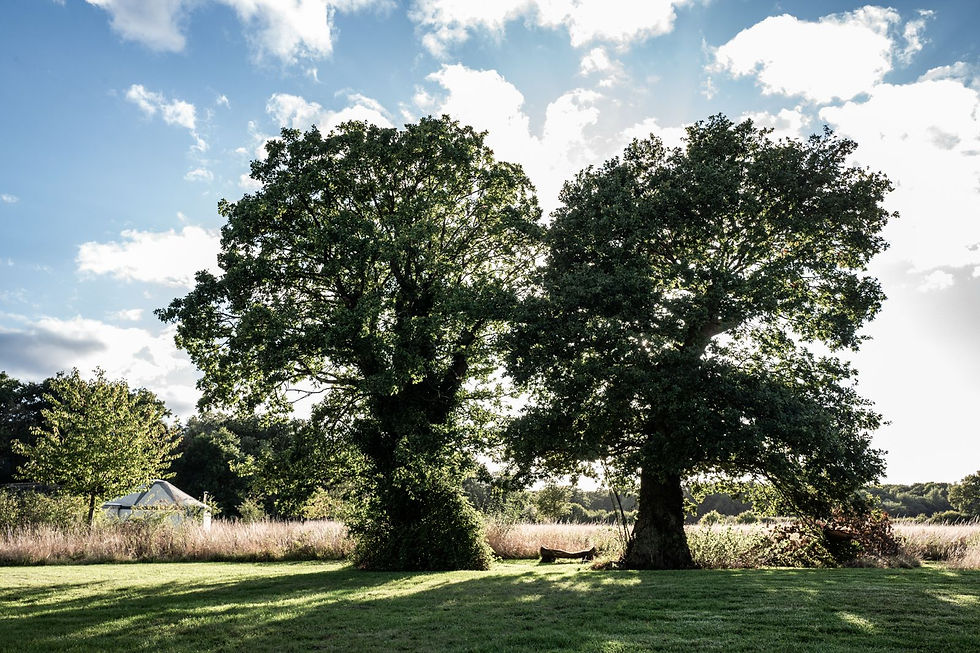
After a nourishing roundtable conversation, we went on a Be Hive Food Forest tour, so our fingers could touch the soil, harvest fresh produce, and enjoy it together around the fire.